

Security Dogma is reader-supported. When you buy through links on this page, we may earn a commission at no extra cost to you. As an Amazon Associate I earn from qualifying purchases. Learn more
Read this first. This page is general information about recording laws, written for security professionals. It is not legal advice, and Security Dogma is not a law firm. Recording laws carry criminal penalties, they change, and courts read them differently from case to case. Before you record anyone, check the current official text of your state’s law, follow your employer’s and client’s written policies, and ask a licensed attorney in your state if you are unsure. Full disclaimer at the bottom of the page.
Body cameras, voice recorders, dash cams, smart glasses and phone apps all make it easy to record on shift. The hard part is knowing when you’re allowed to. In some states you can record a conversation you’re part of without telling anyone. In others, recording a private conversation without everyone’s consent can be a felony, even if you’re on duty and even if your employer handed you the camera.
This guide explains how recording laws work for security guards, gives you a 50-state table with the statute for each state, and covers body cameras, voice recorders, dash cams and the places you should never record. It’s part of our security guard licensing and training section.
Quick answer
- Federal law lets you record a conversation you’re part of with only your own consent, unless you’re doing it to commit a crime or a civil wrong.
- State law can be stricter. California, Florida, Illinois, Maryland, Massachusetts, Montana, New Hampshire, Pennsylvania and Washington generally require every party’s consent (or knowledge) to record a private conversation.
- Some states split the rule. Connecticut, Nevada and Oregon treat phone calls and in-person conversations differently. Delaware and Michigan are unclear. Vermont has no statute.
- Video without sound is usually outside wiretap laws, but recording in private places like restrooms and changing areas is a crime almost everywhere.
- Your licence doesn’t authorize recording. The law, your post orders and the client’s rules all have to say yes.
- Safest habit: record openly, announce it, and get the announcement on the recording.
Why recording law matters more in security than almost anywhere else
Most people record a conversation once in a while. Security officers do it all the time, often in tense moments: a refused entry, a shoplifting stop, a complaint at the front desk, a trespass warning. Those are exactly the recordings that end up in front of a supervisor, a client, an insurer, a lawyer or a court.
That cuts both ways. A lawful recording can protect you against a false complaint. An unlawful one can do the opposite. Depending on the state, it can lead to criminal charges, a civil lawsuit for damages, the recording being thrown out, and questions about your licence and your job. The recording that was supposed to protect you becomes the problem.
From the field — Yair Arad
When I did surveillance work for insurance companies, the recordings weren’t just mine. I had to submit them in the formats the client required, and they were read by lawyers and sometimes by courts. Lawyers went straight to the time stamps, the gaps and anything that wasn’t plainly factual.
I did my homework before the work started. My rule was simple: I won’t do anything that puts my licence at risk. Recording is one of the easiest ways to break that rule without meaning to.
One-party vs all-party consent, in plain English
Almost every US recording law starts from the same idea: it’s illegal to intercept or record a private conversation, then it lists who can make it legal by consenting.
- One-party consent. If you’re part of the conversation, your own consent is enough. Federal law works this way: under 18 U.S.C. § 2511(2)(d), a private person who is a party to a conversation may record it, unless the purpose is to commit a crime or a tort. Most states follow the same rule.
- All-party consent (sometimes called “two-party”). Everyone in the conversation has to agree. Washington’s statute, for example, makes it unlawful to record a private conversation “without first obtaining the consent of all the persons engaged in the conversation.”
- Not a party at all. If you’re not in the conversation and nobody in it consented, recording it is eavesdropping. That’s illegal under federal law and in every state. A recorder left running in a break room, an office or a car to catch what people say is the classic way guards and investigators get into serious trouble.
Two details trip people up:
- “Private” matters. Most of these laws protect conversations where people reasonably expect not to be overheard or recorded. A shouted argument in a busy public lobby is treated differently from a quiet talk in a manager’s office. But where that line falls is decided case by case, so don’t build a habit around guessing it.
- Federal law is a floor, not a shield. Complying with federal law doesn’t protect you from a stricter state law. Where you are, and where the other person is, decides which rules apply.
The states where everyone must consent
These are the states security officers most need to know. The details differ, which is why each one is listed separately.
- California: Penal Code § 632 requires all parties’ consent to record a confidential communication, and § 632.7 covers cell and cordless phone calls. California’s Supreme Court has applied California law to calls between a Californian and someone in a one-party state.
- Florida: Fla. Stat. § 934.03 allows interception only “when all of the parties to the communication have given prior consent.” A violation is generally a felony.
- Illinois: 720 ILCS 5/14-2 bars surreptitiously recording a private conversation without the consent of all parties.
- Maryland: Courts and Judicial Proceedings § 10-402 allows a participant to record only “where all of the parties to the communication have given prior consent.”
- Massachusetts: G.L. c. 272, § 99 targets secret recording without prior authority from all parties. Recording openly, where everyone knows, is treated differently, but hidden recording of a conversation is a serious crime.
- Montana: MCA § 45-8-213 is built around the knowledge of all parties. Giving a warning that the conversation is being recorded generally takes it outside the offense, and there are exceptions for some public officials and meetings.
- New Hampshire: RSA 570-A:2 makes interception “without the consent of all parties” a class B felony. It’s a misdemeanor if you were a party to the conversation, which is still a crime.
- Pennsylvania: 18 Pa.C.S. § 5704(4) allows recording when “all parties to the communication have given prior consent.” Exceptions written for police don’t cover private security.
- Washington: RCW 9.73.030 requires all parties’ consent, but it also says consent is obtained when one party announces “in any reasonably effective manner” that the conversation is being recorded, and the announcement itself is recorded.
States with split or unclear rules
- Connecticut: the criminal law is one-party, but a separate civil law (Gen. Stat. § 52-570d) lets people sue if you record a phone call without everyone’s consent. Consent can be in writing, a recorded verbal notice, or a warning tone.
- Nevada: in-person conversations are one-party (NRS 200.650), but Nevada’s Supreme Court has read NRS 200.620 to require all parties’ consent to record a phone call.
- Oregon: ORS 165.540 is one-party for phone calls, but for in-person conversations all participants must be “specifically informed” that the conversation is being recorded. There are exceptions for unconcealed recording at public events.
- Delaware: two statutes point in different directions. Treat it as all-party until a lawyer tells you otherwise.
- Michigan: the eavesdropping statute reads like an all-party rule, but courts have allowed participants to record their own conversations. The state’s highest court hasn’t settled it. Be cautious.
- Vermont: no recording statute. The rules come from court decisions. Get advice before recording private conversations.
Recording laws by state: the full table
The table shows the general rule for recording a conversation you’re part of. It doesn’t cover every exception, and it isn’t a substitute for reading the statute. Click a state name to see its security guard licence requirements.
| State | General rule | Main statute | Notes |
|---|---|---|---|
| Alabama | One-party | Ala. Code § 13A-11-30 | |
| Alaska | One-party | AS § 42.20.310 | Courts read it as aimed at third parties, not participants |
| Arizona | One-party | A.R.S. §§ 13-3005, 13-3012 | Civil damages also possible |
| Arkansas | One-party | Ark. Code § 5-60-120 | |
| California | All-party | Penal Code §§ 632, 632.7 | Confidential communications; can reach out-of-state callers |
| Colorado | One-party | C.R.S. §§ 18-9-303, 18-9-304 | |
| Connecticut | Split | Gen. Stat. §§ 53a-187, 53a-189, 52-570d | Criminal: one-party. Phone calls: all-party under civil law |
| Delaware | Unclear | 11 Del. C. §§ 1335, 2402 | Conflicting statutes; treat as all-party |
| Florida | All-party ✓ | Fla. Stat. § 934.03 | Generally a felony; civil damages possible |
| Georgia | One-party | O.C.G.A. §§ 16-11-62, 16-11-66 | |
| Hawaii | One-party | HRS §§ 803-42, 711-1111 | Separate crime to install a recorder in a private place |
| Idaho | One-party | Idaho Code § 18-6702 | |
| Illinois | All-party | 720 ILCS 5/14-2 | Private conversations |
| Indiana | One-party | IC § 35-31.5-2-176 | Statute covers phone and electronic communications |
| Iowa | One-party | Iowa Code §§ 808B.2, 727.8 | |
| Kansas | One-party | K.S.A. § 21-6101 | Separate private-place rule |
| Kentucky | One-party | KRS §§ 526.010, 526.020 | |
| Louisiana | One-party | La. R.S. 15:1303 | Not if the purpose is criminal or tortious |
| Maine | One-party | 15 M.R.S. §§ 709–711 | Separate private-place rule |
| Maryland | All-party ✓ | Cts. & Jud. Proc. § 10-402 | Felony |
| Massachusetts | All-party ✓ | G.L. c. 272, § 99 | Targets secret recording |
| Michigan | Unclear | MCL §§ 750.539a–750.539d | Statute reads all-party; courts allow participants to record |
| Minnesota | One-party | Minn. Stat. § 626A.02 | |
| Mississippi | One-party | Miss. Code § 41-29-531 | |
| Missouri | One-party | RSMo § 542.402 | |
| Montana | All-party (knowledge) | MCA § 45-8-213 | A warning generally satisfies it |
| Nebraska | One-party | Neb. Rev. Stat. § 86-290 | |
| Nevada | Split | NRS §§ 200.620, 200.650 | Phone calls: all-party. In person: one-party |
| New Hampshire | All-party ✓ | RSA 570-A:2 | Felony; misdemeanor if you’re a party |
| New Jersey | One-party | N.J.S.A. 2A:156A-4 | |
| New Mexico | One-party | NMSA § 30-12-1 | Statute covers phone calls |
| New York | One-party | Penal Law §§ 250.00, 250.05 | |
| North Carolina | One-party | N.C.G.S. § 15A-287 | |
| North Dakota | One-party | N.D.C.C. § 12.1-15-02 | |
| Ohio | One-party | O.R.C. § 2933.52 | |
| Oklahoma | One-party | 13 O.S. § 176.4 | Not for recording a criminal act |
| Oregon | Split ✓ | ORS 165.540 | Phone: one-party. In person: everyone must be informed |
| Pennsylvania | All-party ✓ | 18 Pa.C.S. §§ 5703, 5704 | Felony |
| Rhode Island | One-party | R.I. Gen. Laws § 11-35-21 | |
| South Carolina | One-party | S.C. Code § 17-30-30 | |
| South Dakota | One-party | SDCL § 23A-35A-20 | |
| Tennessee | One-party | Tenn. Code §§ 39-13-601, 39-13-604 | |
| Texas | One-party | Penal Code § 16.02 | Civil action also possible |
| Utah | One-party | Utah Code § 77-23a-4 | |
| Vermont | No statute | None (case law) | Get advice before recording private conversations |
| Virginia | One-party | Va. Code § 19.2-62 | |
| Washington | All-party ✓ | RCW 9.73.030 | A recorded announcement counts as consent |
| Washington, D.C. | One-party | D.C. Code § 23-542 | |
| West Virginia | One-party | W. Va. Code § 62-1D-3 | |
| Wisconsin | One-party | Wis. Stat. § 968.31 | |
| Wyoming | One-party | Wyo. Stat. § 7-3-702 |
Calls and conversations across state lines
Guards talk to dispatchers, clients and supervisors in other states all the time. If you’re in a one-party state and the other person is in an all-party state, you can’t assume your state’s rule wins. California’s Supreme Court, for example, applied California’s all-party rule to calls made from another state to people in California.
The practical rule: if anyone on the call might be in an all-party state, treat the call as all-party. Announce the recording at the start, and make sure the announcement is on the recording.
Audio vs video: why the camera itself is rarely the problem
Wiretap and eavesdropping laws are mostly about sound: the words people say. Silent video of a public area, such as a parking lot, a lobby or a loading dock, is generally not covered by them. That’s why fixed CCTV cameras usually record video only.
Body cameras, dash cams, smart glasses and phones are different, because most of them record audio by default. A camera that’s legal to point at a public area can still capture a conversation that’s illegal to record. If you work in an all-party state and your device records sound, the audio rules apply to you, not just the video rules.
Video has its own limits too. Several states, including Hawaii, Kansas, Maine and Michigan, have separate laws against installing or using a recording device in a private place. And every state has some form of law against recording people in places where they undress or expect total privacy.
Places you never record
Treat these as off-limits for any camera or recorder, no matter what your post orders say, and no matter who asks you to:
- Restrooms, locker rooms, showers and changing or fitting rooms
- Medical and first-aid areas while someone is being treated
- Private offices and break rooms, when you’re not part of the conversation
- Anyone’s home, car or belongings, unless you have clear legal authority
If a manager or client asks you to hide a camera or recorder in one of these places, the answer is no. Write down who asked, when, and what you said, and report it to your employer. An employer can’t authorize something the law forbids.
Body cameras for security guards
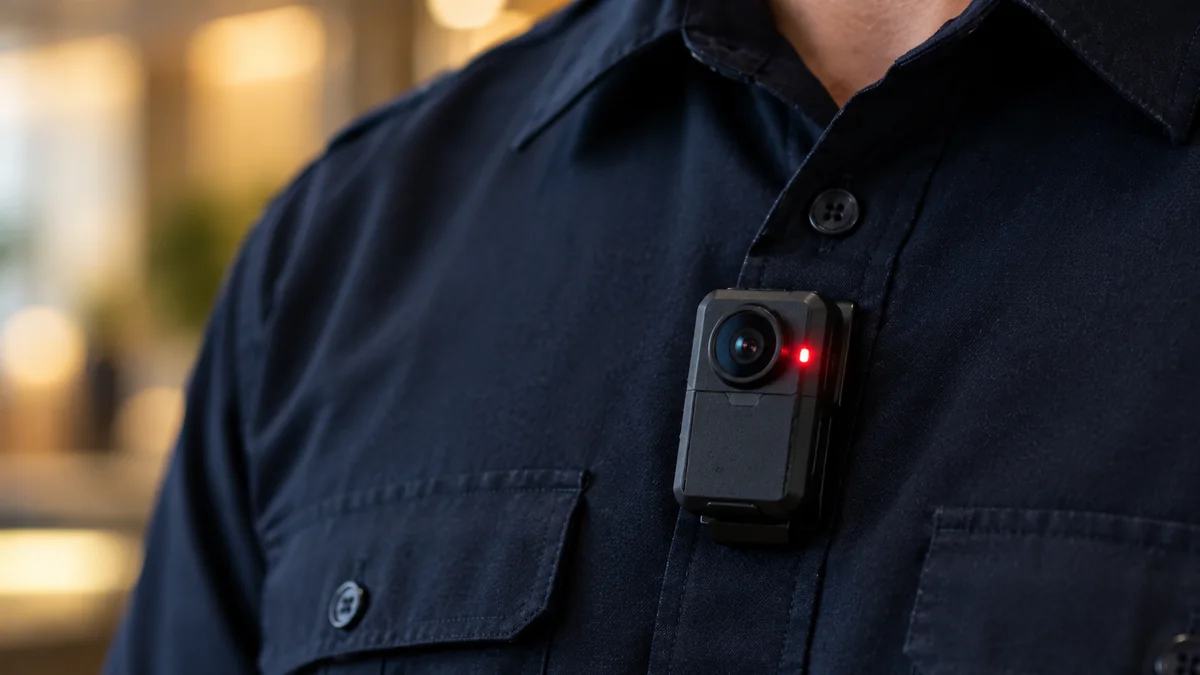
Body cameras are becoming common in private security, and they can settle complaints quickly. But the laws written for police body cameras usually don’t cover private guards. Unless your state’s statute specifically includes private security, assume the ordinary recording rules apply to you.
- Get a written policy. When to record, when to stop, who can view footage and how long it’s kept should come from your employer, in writing.
- Wear it openly. A visible camera with a recording light is better practice than anything concealed.
- Announce it. “This conversation is being recorded.” Say it at the start, so it’s on the recording. In Washington, a recorded announcement counts as consent. Other all-party states don’t say that in their statutes, so an announcement is good practice, not a guaranteed defense.
- Know when to switch off. Private areas, confidential conversations you’re not part of, and anything your policy excludes.
For picks and features, see our guide to the best body cameras for security guards. If you’re setting up a program for a whole team, see our body-worn camera buyer’s guide for security companies.
Voice recorders, dash cams, smart glasses and phone apps
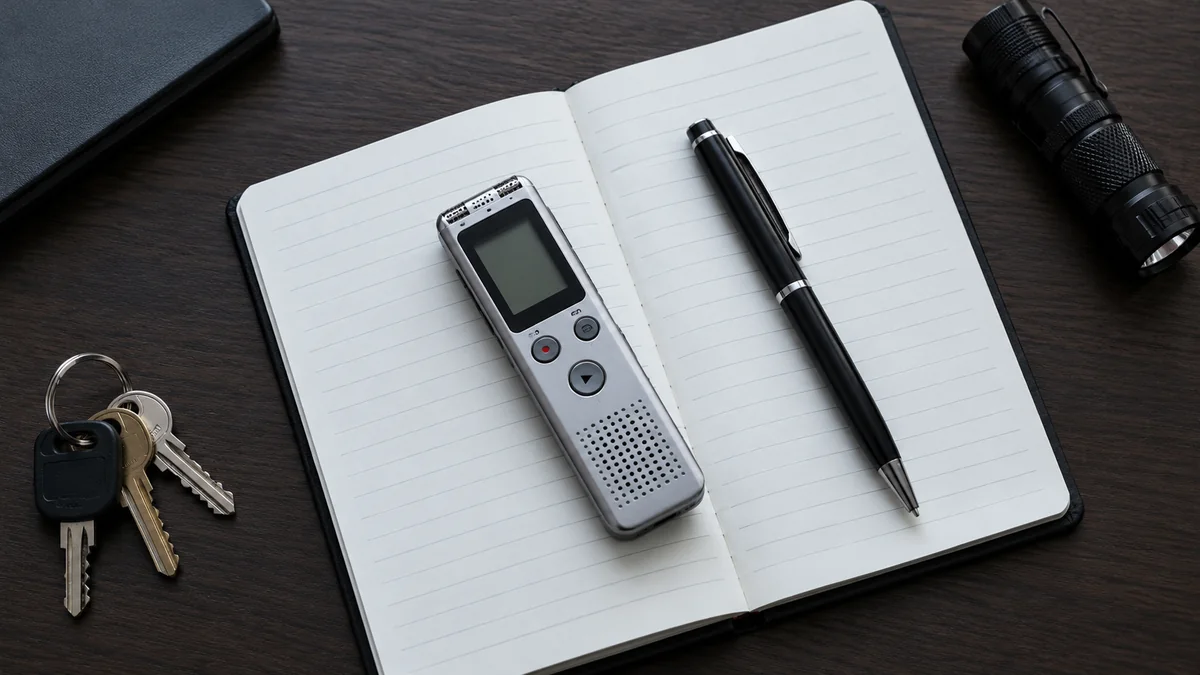
- Voice recorders. Recording your own spoken notes (“0214, side door B open, secured”) is generally not a legal issue. Recording other people is. See our voice recorders and AI note-takers guide.
- AI note-takers and call recorders. Some record phone calls and upload the audio to the cloud for transcription. In an all-party state, recording a call without consent is the same offense whether a tape recorder or an AI app does it. A transcript can also mishear words or get speakers wrong, so check it against the audio before quoting anyone.
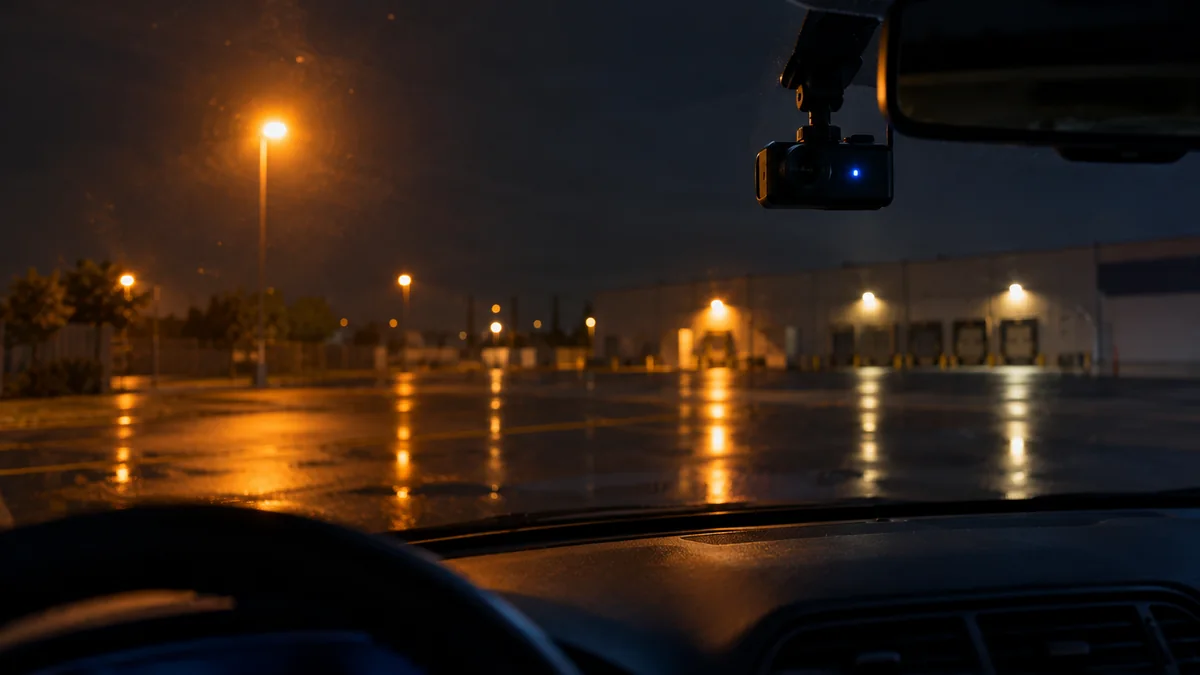
- Dash cams. Many record cabin audio by default. If you carry passengers, or talk to people at the window, check the setting. Our dash cam guide covers the options.
- Smart glasses. They record audio with every video clip, and many courts, hospitals and agencies ban them. See Meta glasses at work.
- Your phone. The same rules apply to your phone’s voice memo app as to any other recorder. Your employer may also restrict personal phones on post.
The law isn’t the only rule: post orders and client policy
Even where the law allows a recording, three more layers can say no:
- Your licence. A guard card or PI licence says what kind of work you can do. It doesn’t make every recording lawful.
- The client’s rules. Hospitals, schools, courthouses, casinos and many offices restrict recording on their property.
- Your employer’s policy. Which devices you can carry, when you can record, and where footage goes.
The strictest rule wins. If the law allows it but the client forbids it, you don’t record. If you’re not sure, ask your supervisor in writing before the shift, not in the middle of an incident.
Notes by role
- Security guards and patrol officers. Your most common recordings are body camera footage and your own voice notes. Keep notes to your own observations, and record interactions only under a written body camera policy. Start with your state’s licence requirements so you know what you’re authorized to do in the first place.
- Door and nightclub staff. Refusals and ejections are where complaints come from, and where people are most likely to say the recording was secret. Record openly and announce it. See how to become a bouncer for the wider job.
- Loss prevention. Store CCTV is usually video only, which is the safer default. Interviews in a back office are private conversations: in an all-party state, don’t record them without everyone’s consent. And never record in fitting rooms. See how to become a loss prevention officer and when security guards can detain people.
- Private investigators. Surveillance video in public is common; recording conversations you’re not part of is not legal anywhere. Pretext calls and recorded interviews must follow the stricter state’s rule. See PI license requirements by state.
- Supervisors and security managers. Write the recording policy down, name the device types (body cameras, dash cams, phones, smart glasses), and train people on the all-party states where you operate.
A simple routine before you press record
- Which state am I in, and which state is the other person in? If either is all-party, use the all-party approach.
- Am I part of this conversation? If not, don’t record it.
- Is this a place where people expect privacy? If yes, stop.
- Do my post orders and the client allow this device? If you don’t know, ask first.
- Record openly and announce it. Get the announcement on the recording.
- Secure and log it right away. Note the time, the device and where the file is stored. Don’t edit the original. Follow your employer’s retention rules.
- Write it into your report. Say that a recording exists and where it is. Our incident report template has a place for it.
Recording gear for security work
How we chose these: we compared manufacturer specifications and published documentation against what security officers actually need on shift. We have not hands-on tested these specific models. The links below are affiliate links; if you buy through them, we may earn a commission at no extra cost to you. Prices change, so the buttons show the current price.
BOBLOV M7 body camera
1080p · GPS · long battery life · built-in storage
Our top pick in our body camera guide. Worn openly on the chest, it records for hours and keeps footage on the device until you hand it over.
Watch out for: It records audio. In an all-party state, follow your written policy and announce the recording.
See current price →Sony ICD-UX570 voice recorder
4GB + microSD slot · built-in USB plug · rechargeable
One-button recording with time-stamped files, for capturing your own observations on patrol. Keeps work notes off your personal phone.
Watch out for: It’s for your own notes. Recording other people’s conversations is where the law applies.
See current price →VIOFO A229 Pro dash cam
Front and rear recording · see our dash cam guide for full specs
The top pick in our dash cam guide for investigators and mobile patrol.
Watch out for: Check whether cabin audio is on. Turn it off if you carry passengers in an all-party state.
See current price →Audio and video recording notice signs
Weatherproof signs for entrances, desks and patrol vehicles
A posted notice tells people they may be recorded. It supports your announcement and your policy.
Watch out for: A sign is not guaranteed consent in an all-party state. Use it together with a spoken announcement and a written policy.
See current price →Our own product: the Security Report Writing Kit includes templates and example reports for incidents that often involve recordings. It’s sold by Security Dogma, so we earn the full sale price.
Frequently asked questions
Can security guards record audio?
Sometimes. In one-party states, a guard can generally record a conversation they’re part of. In all-party states such as California, Florida and Pennsylvania, everyone in a private conversation must consent. Your post orders and the client’s rules also have to allow it.
Which states require all-party consent?
California, Florida, Illinois, Maryland, Massachusetts, Montana, New Hampshire, Pennsylvania and Washington generally require all parties’ consent or knowledge. Connecticut, Nevada and Oregon have split rules, Delaware and Michigan are unclear, and Vermont has no statute.
Is it legal for a security guard to wear a body camera?
Wearing one is generally allowed if your employer approves it. Recording audio with it follows your state’s consent law, and laws written for police body cameras usually don’t cover private guards. Wear it openly, announce recordings and follow a written policy.
Can security cameras record audio?
Silent video of public areas is usually outside wiretap laws. Adding audio brings in consent rules, and in all-party states recording private conversations without consent can be a crime. That’s why most fixed security cameras record video only.
Does a “recording in progress” sign count as consent?
Not reliably. A sign helps, but in all-party states it may not be treated as consent to record a private conversation. Combine it with a spoken announcement that is captured on the recording, and a written policy.
What if I’m in a one-party state and the other person isn’t?
Assume the stricter rule applies. Courts in all-party states, including California, have applied their own law to calls with people in other states.
Can my employer tell me to record people secretly?
An employer can’t authorize a recording the law forbids. If you’re asked to record secretly in an all-party state, or to hide a recorder anywhere people expect privacy, refuse, write down the request, and report it.
Sources
- 18 U.S.C. § 2511 — Cornell Legal Information Institute
- California Penal Code § 632 — California Legislative Information
- Florida Statutes § 934.03 — Florida Legislature
- Maryland Courts and Judicial Proceedings § 10-402 — Maryland General Assembly
- Massachusetts G.L. c. 272, § 99 — Massachusetts Legislature
- New Hampshire RSA 570-A:2 — New Hampshire General Court
- Oregon Revised Statutes 165.540 — Oregon Legislature
- 18 Pa.C.S. § 5704 — Pennsylvania General Assembly
- RCW 9.73.030 — Washington State Legislature
- Reporters Committee for Freedom of the Press — Reporter’s Recording Guide (Nevada)
- Justia — Recording Phone Calls and Conversations: 50-State Survey
Checked in October 2026. State rows marked ✓ were checked against the official statute text; other rows against a statute-cited survey. Laws and court interpretations change. Confirm the current official text with your state legislature and talk to a licensed attorney before relying on any of it. See how we check facts in our editorial policy and how we earn money in our affiliate disclosure.
Legal disclaimer: This page is for general information and education only. It is not legal advice, and reading it does not create an attorney-client relationship. Security Dogma is not a law firm. Laws, licensing rules and court decisions vary by state and change often, and what is written here may not match your situation or be current when you read it. Before you act on anything here, check the official rules from your state licensing agency, follow your employer’s and client site’s policies, and talk to a licensed attorney in your state for legal questions. See our Terms and Conditions and how facts are checked in our Editorial Policy.