
Security Dogma is reader-supported. When you buy through links on this page, we may earn a commission at no extra cost to you. As an Amazon Associate I earn from qualifying purchases. Learn more
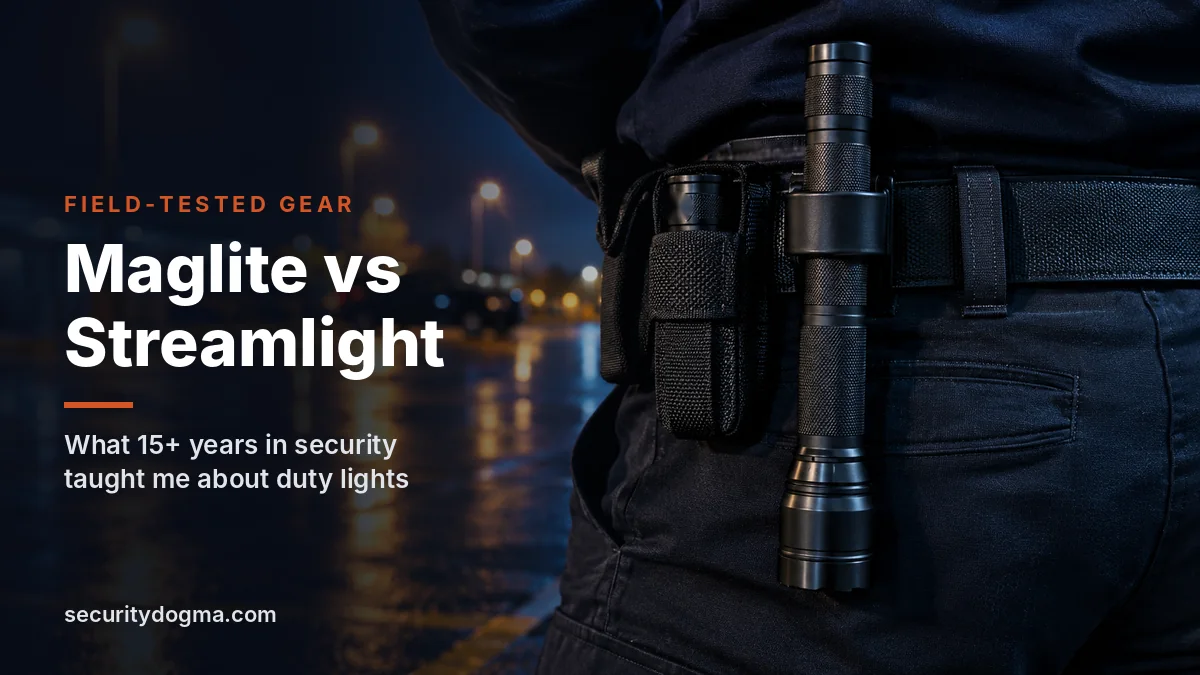
My first shift in nightclub security started on New Year’s Eve, right before the year 2000 rolled in. I was the new guy, so I got the parking lot, where every new guy started. I had a 3-cell Maglite on my belt. Over the next 15+ years of nightclub doors, armed and unarmed guard work, and executive protection, a Maglite and a compact Streamlight came with me almost everywhere.
This Maglite vs Streamlight comparison isn’t built from spec sheets. It’s what each light did well, where each one let me down, and which one I’d tell you to buy for your post.
About this review: This is my personal field experience, not lab testing. I bought both lights with my own money. I carried them years ago, and both have since been updated or replaced. I’m fairly sure my Streamlight was a Scorpion, but I can’t confirm the exact model. Where a link goes to a current model rather than the one I carried, I say so.
Quick answer
- Maglite (3-cell): the more durable, more forgiving light. A set of regular batteries ran a full shift, and the beam is adjustable. Best as your primary light for patrols, parking lots and nightclub work.
- Streamlight (compact): much brighter and much smaller. It disappears into a pocket, a car or a go-bag. Best for executive protection and as a backup. The catches are the cost of the light and its batteries, and fast battery drain under heavy use.
- My real answer: once you know your post, carry both if your job allows it. Each one covers the other’s weakness.
Watch: Maglite vs Streamlight on real security shifts
Prefer to watch? This video covers how Yair Arad used both lights across more than 15 years of nightclub doors, guard work and executive protection: beam, batteries, durability, the tail-switch problem, using a light to signal, and which light fits which role.
Video illustrations and narration were produced with AI tools. The field experience described is Yair Arad’s own.
Maglite vs Streamlight at a glance
| Maglite 3-cell | Streamlight compact | |
|---|---|---|
| Where I used it | Nightclubs, guard posts, patrols | Executive protection, backup everywhere |
| Batteries | Regular D-cells, cheap and easy to find | CR123A lithium, expensive |
| Runtime in my use | A full 5–6 hour shift on one set; heavy use means buying a lot of D-cells | Drained fast on busy nights |
| Beam | Good, and adjustable | Much brighter |
| Durability | Took drops and kept working | Well made, but more fragile |
| Carry | Belt ring at the lower back | Pocket or holster |
| Biggest drawback | Size | Cost and accidental switch-on |
| Today’s pick | Check price | Check price |
The two lights I carried
The Maglite. Most of my career it was a 3-cell Maglite with a standard bulb, not the LED version. At times I also carried the 2-cell. For a brief period I tried a 4-cell, but it was far too big for the roles I worked, and I went back quickly. I didn’t choose the bulb over LED for any reason; the bulb is just what I had.
The Streamlight. A compact light that I’m fairly sure was a Scorpion, running on lithium batteries. What I remember most clearly is how expensive those batteries were.
I bought both myself. In this line of work, a flashlight is your equipment, not something you wait for an employer to hand you.
Where each one earned its place
Nightclub security. Inside a club, a flashlight does far more than light up dark corners:
- Checking IDs at the door.
- Clearing a path when the floor got crowded.
- Signaling other security staff.
That last one matters more than most new guards realize. A club is loud, and colleagues don’t always hear radio traffic. If something started and you needed help but couldn’t get to your radio, you held your light up and signaled. The rest of the team knew what it meant.
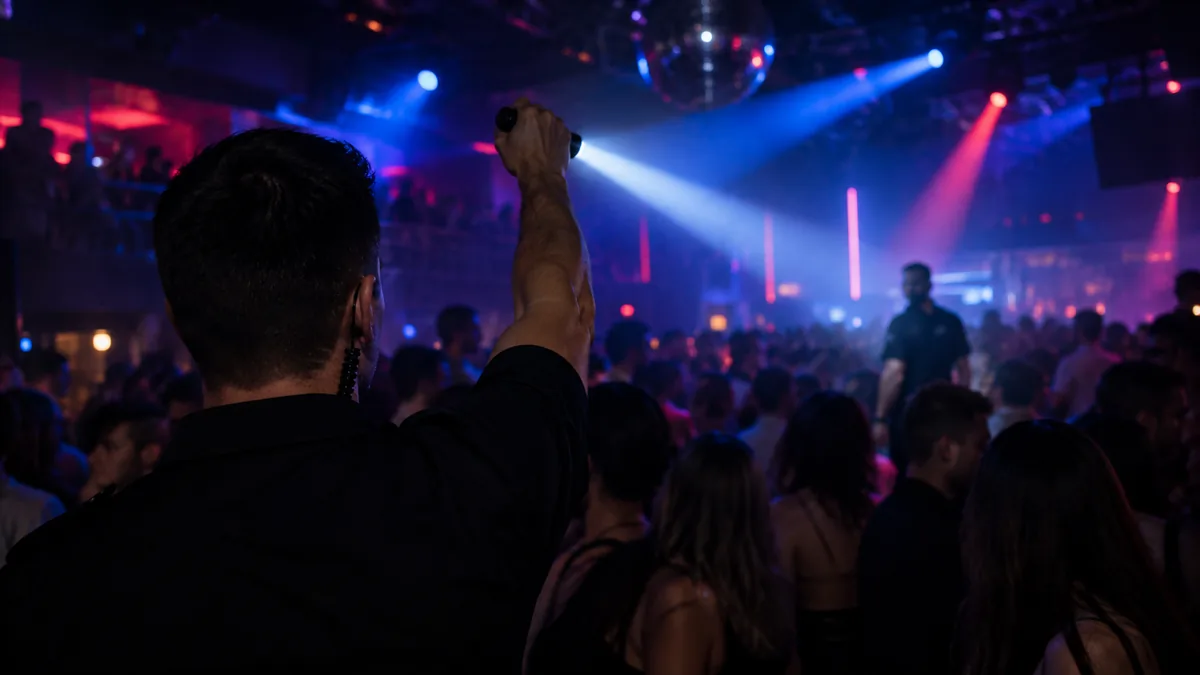
My first post, the parking lot, was Maglite only. Once I moved inside, I carried both. Most nights the Maglite was my main light and the Streamlight was my backup, but for a stretch I made the Streamlight my main light because it was smaller. The first nights I did, I was so used to the Maglite’s weight on my belt that I thought I’d forgotten my flashlight. At that club, forgetting it was expensive. Infractions were settled with push-ups at the end of the shift, which we’d all agreed to. Forgetting your light was about 50 push-ups; missing a shift was 100. You learn to pack your gear.
Armed and unarmed guard work. I carried both, the Maglite as my primary and the Streamlight as backup. Night shifts were common, and a light is essential on patrol.
Executive protection. The Streamlight, because of its size. It lived in my pocket, my car or my backup bag for anything unexpected. Even in EP, a light became a communication tool. Late one night I drove a client’s child to a private doctor. A colleague was already waiting at the location and signaled me with his light as I approached, so I knew the area was clear before I pulled in.
If you’re working toward either role, see How to Become a Bouncer and How to Become a Bodyguard.
Battery life: why I chose regular batteries on purpose
This is where the two lights differ most, and where my advice may surprise you.
I never wanted a rechargeable light at work, for one reason. If the battery dies mid-shift and there’s nowhere to charge it, you’re out of luck. With regular batteries, you carry spares and you’re back in business in seconds. For me, that was the best fail-safe.
Rechargeables do save money over time, and I understand why many guards use them. I paid a lot for batteries over the years, especially for the Streamlight. But for me, being sure my light would work for the whole shift mattered more than the savings.
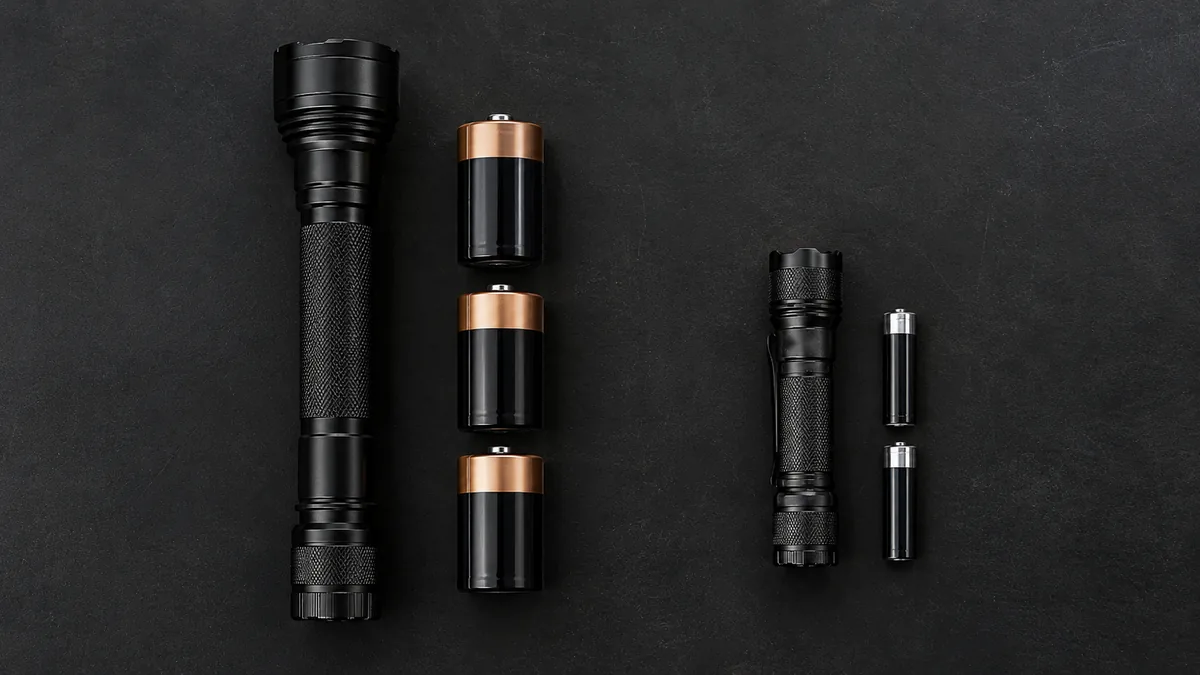
The Maglite ran on D-cells I could buy almost anywhere. A fresh set lasted a full 5–6 hour nightclub shift, even when I used it heavily. Over months of heavy use I went through plenty of D-cells, but they were cheap, and I never ran out of light mid-shift.
The Streamlight was the opposite. On nights when it was my main light and I used it a lot, the batteries drained fast, and I remember wishing I’d started the shift with my Maglite instead. The batteries were also expensive, and that was its biggest drawback for me. Part of the reason may be the technology: the original Scorpion used a xenon bulb, which is far less efficient than today’s LEDs.
What about LED? I carried the bulb version, but if an LED Maglite does the same job and runs longer on the same batteries, that’s added value. Use it. Today’s 3-cell Maglite is LED and adds power-saving modes my old one never had.
For a deeper look at rechargeable versus disposable, see the battery section in Best Flashlights for Security Guards.
Durability: the Maglite wins clearly
The Maglite was by far the more durable light. It got dropped, knocked around and carried through every kind of shift, and it kept working. It also felt solid and comfortable in the hand, which is the main reason I carried it.
The Streamlight felt well made and precise in the hand, and it was the more refined light of the two. But it didn’t take abuse the way the Maglite did, and it felt more fragile when it got knocked around. To be fair, I may have treated it more gently because of what it and its batteries cost. If your light is going to take a beating, the Maglite is the one I’d trust.
Beam and brightness
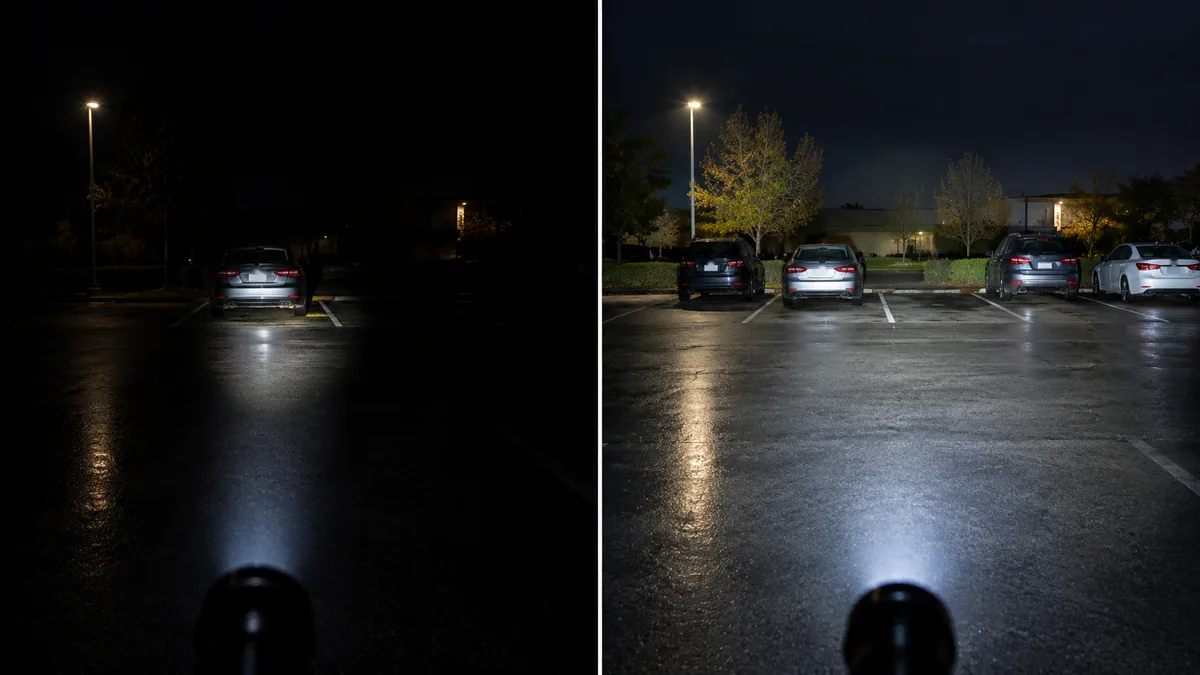
Both had a good beam. The Streamlight was by far the brighter light.
The Maglite’s advantage was that I could adjust the beam. You twist the head to go from a tight spot to a wide flood. That’s useful when one minute you’re checking an ID card and the next you’re scanning a parking lot. Current Maglite LED models still focus the same way.
Carry and comfort
I wore the Maglite in a belt ring at my lower back. It stayed out of the way during a shift and was easy to reach.
The Streamlight went in my pocket or a holster. That’s where its main design flaw showed up. The on/off switch is on the tail, and a few times it turned on in my pocket without my noticing. That drained the batteries, and on a few occasions it got hot enough to burn a hole in my pants. With any bright pocket light, check that it’s off before you put it away, and if your model has a lockout mode, learn to use it.
A flashlight is not a weapon
People assume a big Maglite doubles as a weapon. For me, that was a big no.
I carried the Maglite because it was durable and comfortable. If I’d carried it thinking it would protect me in a fight, I’d already have been doing my job wrong. At the club, if a fight broke out in your area, the team saw it as our failure. Our whole focus was prevention: reading the room and stepping in before anything started. A fight in your area also meant push-ups at the end of the night.
I remember a fight breaking out near me, and my head of security tearing into me afterward. His question wasn’t how I handled it. It was why I didn’t see it coming. That’s the mindset. If you think of your light as an impact tool, you’ve failed before you’ve started. Put that energy into de-escalation and awareness instead.
One practical point: in a physical altercation, a big light that falls or gets knocked away can be picked up and used against you. When you’re not actively using it, keep it in its ring or holster rather than loose in your hand.
Maglite vs Streamlight: which one should you buy?
It depends on your post and your role. This is how I’d split it:
| Role | Primary light | Backup |
|---|---|---|
| Nightclub or door security | Maglite | Compact Streamlight |
| Guard work, night patrols | Maglite | Compact Streamlight (I carried both) |
| Executive protection | Compact Streamlight | Spare batteries in the car or bag |
In the Maglite vs Streamlight question, my answer is both: once you know your post, carry both if your job allows it. A backup light always paid off for me.
My advice if you’re new: don’t overspend yet
When you’re starting out, don’t buy the most expensive light on the market. Don’t buy the cheapest either; a light that fails on your shift is worse than no light. Start with one solid, mid-priced primary light. Then learn your post, your role and your responsibilities. Once you know how you actually use a flashlight on the job, add a backup and decide what’s worth paying more for. That’s how I ended up carrying both.
For the full kit to budget for, see the Security Guard Equipment List.
Today’s versions
Maglite ML300L 3-Cell D LED
The LED version of the 3-cell I carried, on regular D-cells
Check price →I carried the bulb version, not this LED model. It keeps what I valued: regular D-cell batteries and a beam you can focus.
Streamlight ProTac 2L-X
A compact tail-switch light that runs on CR123A batteries
Check price →I haven’t used this exact light. I picked it because it’s the closest current Streamlight to the compact one I carried: small, bright, tail switch, and it runs on spare batteries rather than needing a charger. CR123A batteries still cost more than D-cells, so budget for spares.
Frequently asked questions
Is a Maglite or a Streamlight better for security guards?
Neither is better everywhere. In my experience, the Maglite is tougher, runs longer on cheap batteries and has an adjustable beam, which makes it better as a primary light on patrol or at a nightclub. A compact Streamlight is brighter and much smaller, which makes it better for executive protection and as a backup.
Should a security guard use a rechargeable flashlight?
I preferred regular batteries, because a dead rechargeable with nowhere to charge leaves you without a light, while spare batteries swap in seconds. Rechargeables save money over time; if you prefer one, carry a backup light or a spare charged battery.
Can I carry a Maglite as a weapon?
I never did, and I don’t recommend thinking of it that way. Good security work is about prevention. Whether you can carry or use any object for self-defense depends on your local laws and your employer’s policy; check both. A large light can also be taken from you and used against you.
Did you test the current models?
No. I carried an older bulb-type 3-cell Maglite and a compact Streamlight, years ago. The linked products are current versions, and each card says so.
Why carry two flashlights?
Lights fail, batteries die, and lights get dropped or lost. In every role I worked, a backup paid off.
Reviewed October 28, 2026.
Sources
- Maglite: ML300L LED 3D Flashlight (focusing beam, D-cell power, Eco mode)
- Streamlight: Scorpion / Scorpion LED product fact sheet (xenon bulb, two CR123A lithium batteries)
Next steps
- → Field-Tested Security Gear: What I Actually Carried
- → Best Flashlights for Security Guards
- → Two-Way Radios for Security Guards
- → Security Guard Equipment List
- → Armed vs Unarmed Security Guard
How we choose and check gear: see our Editorial Policy.
Disclaimer: This page shares personal experience for general information only. It is not legal, safety or professional advice. Follow your employer’s and client’s policies and local laws on carried equipment, use of force and uniforms. Products change over time, so check current specifications before buying.
Weapons and use-of-force disclaimer: Nothing on this page recommends using a flashlight or any other object as a weapon. Laws on carrying and using objects for self-defense, and on use of force by security personnel, vary by country, state and city. Follow your local laws, your license requirements, and your employer’s and client’s policies. Security Dogma and the author accept no liability for how readers use any equipment.
Images on this page are AI-generated illustrations, not photos of the author’s equipment.