

Security Dogma is reader-supported. When you buy through links on this page, we may earn a commission at no extra cost to you. As an Amazon Associate I earn from qualifying purchases. Learn more
Quick answer
- A security guard interview checks three things: whether you can legally work the post (guard card and background check), whether you’ll show up for every shift, holidays included, and how you handle upset people.
- Expect “tell me about yourself,” “why security,” a question about a difficult person you dealt with, and “what would you do if…” scenarios.
- Interviewers listen for a calm manner, a service mindset and words before force. Answers where physical action comes first rule candidates out.
- Bring your guard card, ID, resume and references in one folder, and wear clean, plain, dark clothes.
Over my career, first in security and later in management, I’ve interviewed hundreds of people. In security work I interviewed many guards. Some fit, some didn’t. This guide is written from that side of the table.
It covers U.S. guard jobs. Licensing and background-check rules differ by state, so check yours in our security guard license requirements by state.
Prefer to watch? This video walks through the same questions and answers in about six minutes.
This video is hosted by YouTube (Google). Loading it shares your IP address with Google and may set cookies. See our Privacy Policy.
This video was made with AI tools and summarizes this guide. Scenes and charts are illustrations, not real data or real events.
What do security companies look for in an interview?
They look for someone they can put on a post and trust with the public. When I hired, four things mattered most: a calm demeanor, a high service orientation, the ability to deal with difficult situations, which I judged from how candidates described real ones, and out-of-the-box thinking for problems post orders don’t cover.
| What they check | How they check it |
|---|---|
| You can legally work the post | Guard card or license status, ID, and a background check with your written permission |
| Calm and service-minded | How you describe dealing with upset or irate people, at any job |
| Judgment | “What would you do if…” questions |
| Reliability | Availability, including nights, weekends and holidays, and your work history |
| Attitude and appearance | How you carry yourself from the moment you walk in |
What questions do they ask in a security guard interview?
The questions I asked were the ones you should expect almost anywhere: tell me about yourself, why security, what would you do in certain situations, and tell me about a difficult situation and how you handled it, especially with irate people. Here’s what each one checks and how a weak answer differs from a strong one. Use these as patterns, not scripts.
“Tell me about yourself.”
What they’re checking: whether you can give a short, organized answer that fits the job.
- Weak: your life story, or “I just need a job.”
- Strong: about 30 seconds: your license status, work that shows reliability or service to the public (retail, hospitality, customer service, military), and why you want this kind of post.
“Why do you want to work in security?”
What they’re checking: realistic expectations. Someone who expects action may not last on a quiet overnight post.
- Weak: “I want action,” or anything about using force.
- Strong: show you know the job is mostly observing, helping people and reporting, and that you want steady work you can build on.
“Tell me about a difficult situation with an upset person and how you handled it.”
What they’re checking: this is the question I relied on most. I asked what candidates had actually done with people who were upset, whether it happened in security work or not. A real story tells you more than any hypothetical.
- Weak: a story where you “put them in their place,” or “I’ve never had one.”
- Strong: a short, real example from any job: what happened, how you stayed calm and lowered the tension (listening, a steady voice, offering options), and how it ended. Calling a supervisor is a good ending, not a weak one.
“Do you have your guard card, and is it current?”
What they’re checking: whether they can schedule you, and whether you’re straight with them. Many states have a public license search, so your answer can be checked in a minute.
- Weak: “I think so,” or a vague answer about a pending application.
- Strong: license type, number and expiration date, with a copy in your folder. If it’s pending, say what’s done and what’s left.
Check your own status before the interview. Our state guides, like the California guard card guide, link to the official search.
“Can you work holidays, nights and weekends?”
What they’re checking: whether you can cover the shifts they need. Buildings, stores, hospitals and events still need guards on Thanksgiving, Christmas and New Year’s Eve. If you’re interviewing in the fall, expect a direct question about the holidays.
- Weak: “Anything,” then a list of exceptions once you’re hired.
- Strong: an honest, specific answer: which holidays you can work, whether you can do nights, and how you’ll get to the site. Being open to holiday shifts can help you stand out.
Ask how holiday shifts are paid. Whether there’s extra pay depends on the employer and any contract. Our night shift survival guide covers what working overnight takes.
“Why did you leave your last job?”
What they’re checking: attitude and honesty, because they may call your references.
- Weak: blaming a former boss, or a story that doesn’t match your application.
- Strong: a short, factual reason and what you learned, with no complaints.
How do you answer security guard scenario questions?
Put words before action. The order is observe, de-escalate, report and call it in, within your post orders and your authority. The answer that ruled candidates out for me fastest was one where physical action came before de-escalation. Start with what you’d notice, what you’d say and who you’d tell.
| Scenario | Weak answer | Strong answer pattern |
|---|---|---|
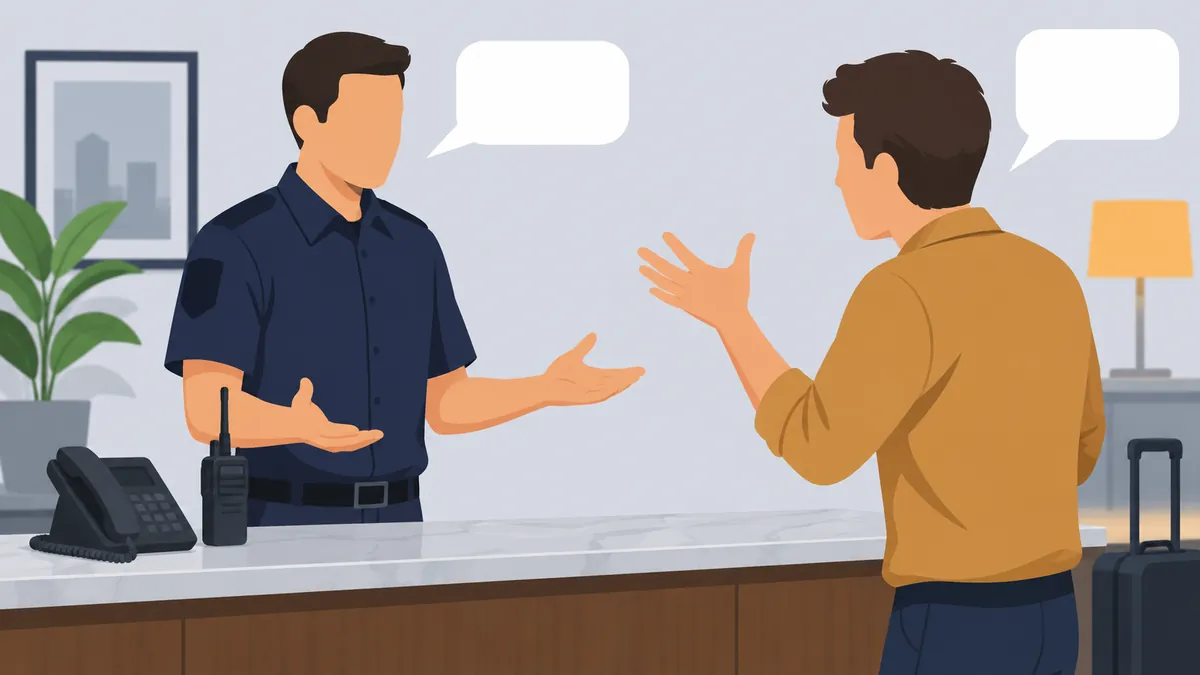
| An irate guest is shouting at the front desk | “I’d remove them.” | Approach calmly, listen, lower your voice, offer options, involve the manager, and call police only if it turns into a threat. Write it up. |
| Someone is on the property after hours | “I’d confront them and make them leave.” | Observe, note a description, notify your supervisor or dispatch per post orders, approach only if post orders say so, and call police if there’s a threat. |
| A guest refuses to leave | “I’d grab them and walk them out.” | Explain the rule, give them a way to leave with dignity, involve the client contact, and call police if they still refuse. |
| You see a coworker asleep on post | “Not my business.” | Make sure the post is covered and report it to the supervisor as your company requires. It’s a safety issue. |
| Someone is shoplifting | “I’d tackle them.” | On most posts: observe, describe and report. On a loss prevention post you may be allowed to stop someone, but only when the company’s criteria are met and only in the way the policy allows. |
When I worked loss prevention, we were told to stop someone only if specific criteria were met, and only in the ways we were allowed. That’s the answer an interviewer wants: you know the policy has limits and you’d follow them. State law sets the outer limit. In California, for example, a merchant with probable cause may detain a person for a reasonable time to investigate in a reasonable manner (Penal Code §490.5(f)). Your employer’s policy can be stricter. Read can security guards detain people? before a retail or loss prevention interview, and see de-escalation for security guards for the vocabulary.
Do you need strong report writing to get hired?
Not to get through the interview, in my experience. I never tested writing when I hired guards, and I was never asked to write a report in one of my own interviews. It’s a skill that can be developed on the job. It still pays to arrive knowing the basics: a report is factual, in time order, and answers who, what, when, where and what you did. Practice with our free incident report template and the guide to writing a daily activity report. The Report Writing Kit has worked examples.
What gets candidates ruled out?
For me it came down to three things:
- Attitude.
- Force before words. Saying physical action comes before de-escalation.
- Appearance. On many posts the guard is the first person a visitor sees.
Also avoid the easy mistakes: answers that don’t match your application or license record, and showing up without your ID and license documents.
What should you bring and wear to the interview?
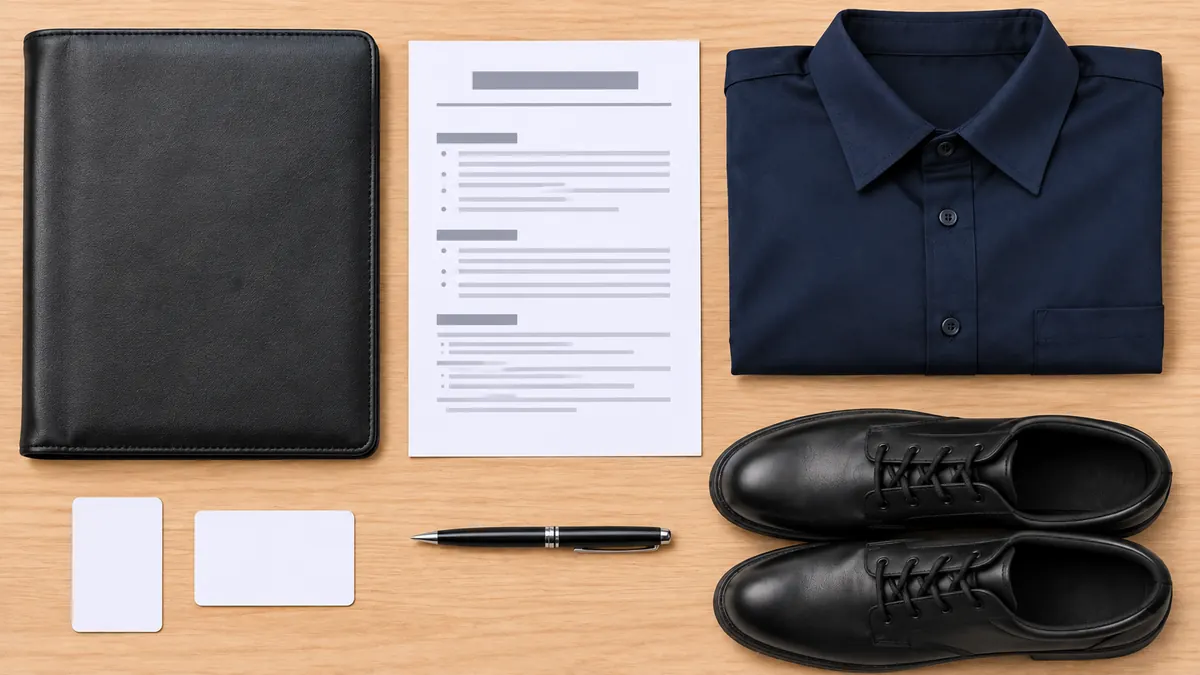
Bring your guard card and any other certificates or permits, photo ID, a printed resume, and the names and phone numbers of references, kept together in one folder. Wear clean, plain, dark clothes: a collared shirt, dark trousers and polished dark shoes. Skip anything that looks like a police uniform. For what you’ll wear once hired, see our security guard uniform guide.
Some links in this section are affiliate links. If you buy through them, Security Dogma may earn a commission at no extra cost to you. As an Amazon Associate I earn from qualifying purchases. Learn more. These are research picks: I haven’t tested these exact products.
Samsill Professional Padfolio
Faux leather · letter-size writing pad · document pocket · pen loop
One folder for your guard card copy, ID, resume and references, with a pad for notes. Papers stay flat and clean when you hand them across the desk.
Watch out for: it’s faux leather. Fine for interviews, not built for daily use on post.
See current price →Paid link · opens Amazon.com
Bates Men’s High Gloss Duty Oxford
High-gloss upper · rubber lug outsole · round toe
A plain black uniform oxford that looks right at an interview and on lobby, front-desk and corporate posts once you’re hired. The high-gloss finish needs a wipe, not a full polish.
Watch out for: it’s a shoe, not a boot. For patrol or outdoor posts, see our boots guide.
See current price →Paid link · opens Amazon.com
KIWI Black Shoe Polish Paste
Paste polish · black
For leather shoes or boots you already own. Appearance was one of the things I judged in interviews, and shoes are easy to get right.
Watch out for: for smooth leather only, not suede, fabric or high-gloss synthetic uppers.
See current price →Paid link · opens Amazon.com
Questions to ask the employer
- What kind of post would I start on: standing or patrol?
- What’s the pay rate, and how are overtime and holiday shifts paid?
- What training do you give before the first shift, and is it paid?
- Who supervises nights, weekends and holidays, and how do I reach them?
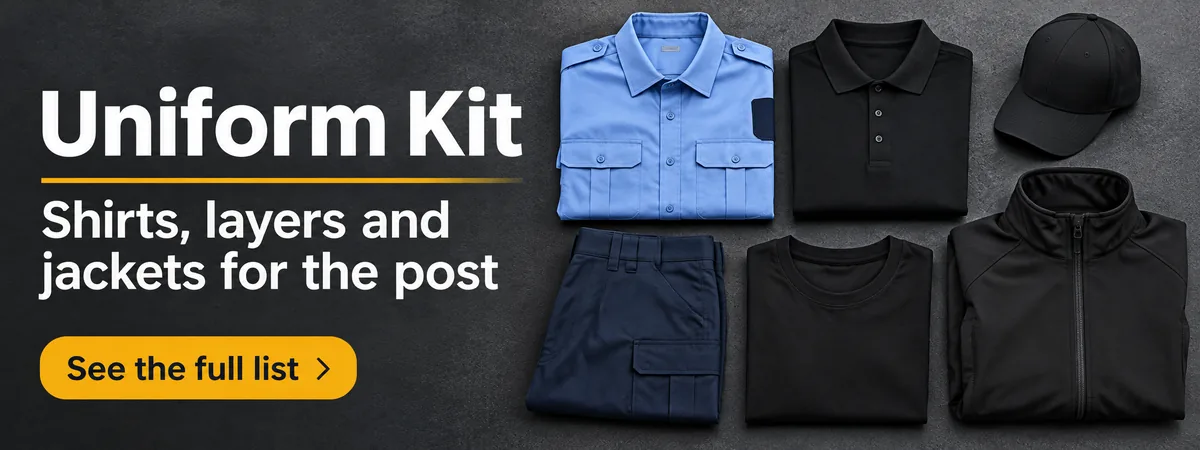
- Is the uniform provided, and is there a deposit?
To compare the pay you’re offered, see security guard salary by state.
What do they ask in a security supervisor interview?
Supervisor interviews are about people. When I hired supervisors I asked how they’d deal with employees and their personal issues, how they’d help, how they’d develop a guard, how they’d know when someone can’t be developed, and how they’d handle poor performance. I always looked for people who try to develop someone first. A strong answer shows that order: understand the problem, support and coach, set clear expectations, document, and only then move to discipline.
What happens with the background check?
Under federal rules, an employer may ask about your background, but it must treat all applicants the same, and it can’t ask for medical information until it has made you a job offer. If it uses a background-check company, it must get your written permission first. If it may reject you because of something in that report, it must first give you a copy of the report and a notice of your rights, so you can fix mistakes. That’s how the EEOC and FTC explain it in their joint guide for job applicants. Your state or city may add rules, and guard licensing has its own state background check.
If there’s something in your past, be ready to explain it briefly and honestly. Our guide to security guard jobs with a criminal record covers how licensing boards look at it.
If you’re hiring: how to use these questions
If you hire guards directly, ask every candidate the same core questions and judge the answers the same way: calm demeanor, service orientation, how they handled real difficult situations, and whether they put words before force. Verify the license on the state regulator’s search, and follow the federal background-check rules above.
Plan for the hire that doesn’t work out. Be ready to backfill or cover shifts if a new guard quits early, especially before the holidays. Supervisors should watch for warning signs ahead of time, for example missed check-ins, late arrivals or complaints about the post, and talk to the guard before it becomes a gap in coverage. If you’re hiring a guard company instead, see how to hire a security guard.
Free printable: interview practice sheet
Get a one-page PDF with the questions from this guide, what each one checks, and space to write your own answers. It’s free: enter your email and we’ll send it, along with occasional Security Dogma guides. You can unsubscribe at any time.
FAQ
What are the qualities of a good security guard?
When I hired guards, I looked for four things: a calm demeanor, a high service orientation, the ability to deal with difficult situations, and out-of-the-box thinking for the problems post orders don’t cover. Reliability and honesty matter just as much. A guard who misses shifts, or whose reports can’t be trusted, is a problem for both the company and the client.
Interview questions are built to test these traits. “Tell me about a difficult person you dealt with” tests calm and judgment. Availability questions test reliability. Comparing your answers with your application and license record tests honesty.
How do I answer “tell me about yourself” in a security guard interview?
Keep it to about 30 seconds and make every part relevant to the post. A simple structure works: your license status, one or two jobs that show reliability or service to the public, one strength with a quick example, and why you want this kind of post.
Example answer: “I have a current guard card. I spent three years at a hotel front desk, where I dealt with upset guests most nights and learned to stay calm and bring in a manager when needed. I’m looking for steady overnight work, and I can work holidays.” Use your own facts. Interviewers can tell when an answer is memorized.
Do security guards work on holidays?
Yes. Many sites need coverage every day of the year, so holiday shifts are part of the job, and an interviewer may ask exactly which holidays you can work. Give a specific answer, not “anything.”
Holiday pay depends on the employer, any contract and state law. Under the federal Fair Labor Standards Act, payment for time not worked, such as holidays, isn’t required; it’s generally a matter of agreement between employer and employee. Guards on some federal service contracts get holiday benefits through Service Contract Act wage determinations. Ask how holiday shifts are paid before you accept an offer.
Can I get a security job with no experience?
Yes. Many entry-level guard jobs only require the state license. What you need to show is the traits interviewers look for. When I hired, I asked candidates what they had done with upset people, whether it happened in security work or not, so examples from retail, restaurants, hospitality, call centers or the military all count.
Prepare two short, real stories: one about calming someone down, and one about being reliable, such as covering a shift or a long record of showing up on time. Our guide on how to become a security guard covers the licensing steps.
Will they ask about my criminal record?
They may. It’s generally legal for an employer to ask about your background as long as it treats every applicant the same. If it uses a background-check company, it needs your written permission first. If it might reject you because of something in that report, it must first give you a copy of the report and a notice of your rights, so you can fix mistakes. Your state or city may add its own rules.
The state licensing agency also runs its own background check for the guard card. If there’s something in your past, answer briefly and honestly and be ready to explain why it shouldn’t affect your ability to do the job. See our guide to security guard jobs with a criminal record.
What questions do they ask for armed security jobs?
Expect the same core questions, plus questions about your armed license or permit, when it expires, and the state-required training you’ve completed. Requirements differ by state; see armed vs. unarmed security guards.
Scenario questions still carry the most weight. Interviewers want the same order as on any post: observe, use words first, call for help and follow post orders. Treating the weapon as the answer to a scenario is the same red flag as putting physical action before de-escalation.
Sources
- U.S. Equal Employment Opportunity Commission and Federal Trade Commission, Background Checks: What Job Applicants and Employees Should Know (issued March 11, 2014; checked November 12, 2026).
- California Penal Code §490.5(f) (as amended by Stats. 1994, 1st Ex. Sess., ch. 34; checked November 12, 2026).
- U.S. Department of Labor, Holiday Pay (checked November 12, 2026).
- Author experience: Yair Arad, hiring as a security manager and security company owner.
Last verified November 12, 2026.
Firearms and weapons disclaimer: This page discusses firearms or other weapons for general information only. It is not legal advice, not firearms training, and not a recommendation to buy, carry or use any weapon. Laws on owning, carrying, transporting and using firearms, stun guns, pepper spray, batons and knives vary by state, county and city. They change often, can be different for security work, and breaking them can lead to criminal charges. Before you carry or use any weapon, confirm the current law where you are, get any required permit or license, train with a certified instructor, and follow your employer’s, client’s and property owner’s rules. You alone are responsible for how you buy, carry, store and use any weapon. Security Dogma and its authors accept no liability for any injury, loss, damage or legal consequence that results from acting on this information. A product link does not mean the item is legal where you live, so check local restrictions before you buy.
Legal disclaimer: This page is for general information and education only. It is not legal advice, and reading it does not create an attorney-client relationship. Security Dogma is not a law firm. Laws, licensing rules and court decisions vary by state and change often, and what is written here may not match your situation or be current when you read it. Before you act on anything here, check the official rules from your state licensing agency, follow your employer’s and client site’s policies, and talk to a licensed attorney in your state for legal questions. See our Terms and Conditions and how facts are checked in our Editorial Policy.