

Featured image: AI-generated illustration. Not an Oakley product photo.
Security Dogma is reader-supported. When you buy through links on this page, we may earn a commission at no extra cost to you. As an Amazon Associate I earn from qualifying purchases. Learn more
I’ll start with the moment everyone remembers. I was on an executive protection detail at a client’s home. It had just rained, and I was walking down a steep driveway with a colleague. I was telling him that my boots had poor traction on wet surfaces. Mid-sentence, my feet went out from under me, and I landed on my backside.
I was embarrassed, and I was also laughing, because the timing was perfect. That was the one real weakness of a boot I otherwise liked a lot. This review covers both sides.
About this review: This is my personal field experience, not lab testing. I bought my own pair. I wore a first-generation pair of Oakley Assault boots years ago; Oakley’s first-generation boot came out in 2002. I owned one pair, and I don’t remember every detail, such as what I paid or exactly how long it lasted. When I don’t remember something, I say so. The boot linked on this page is a current Oakley model, not the pair I wore.
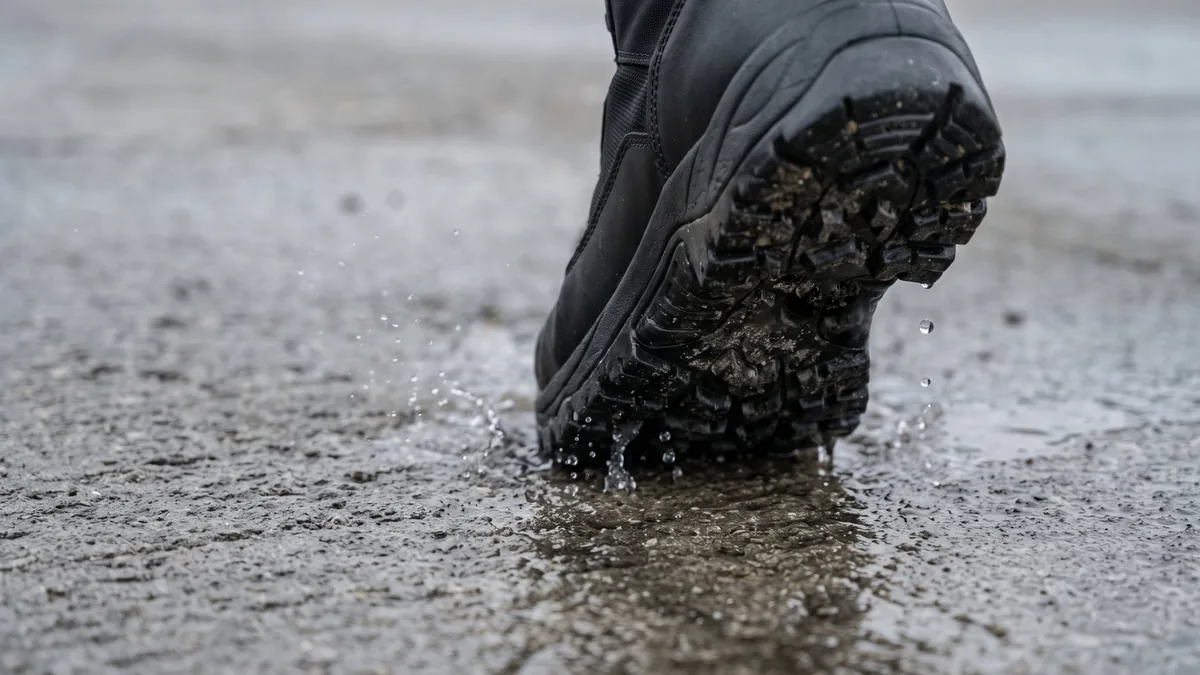
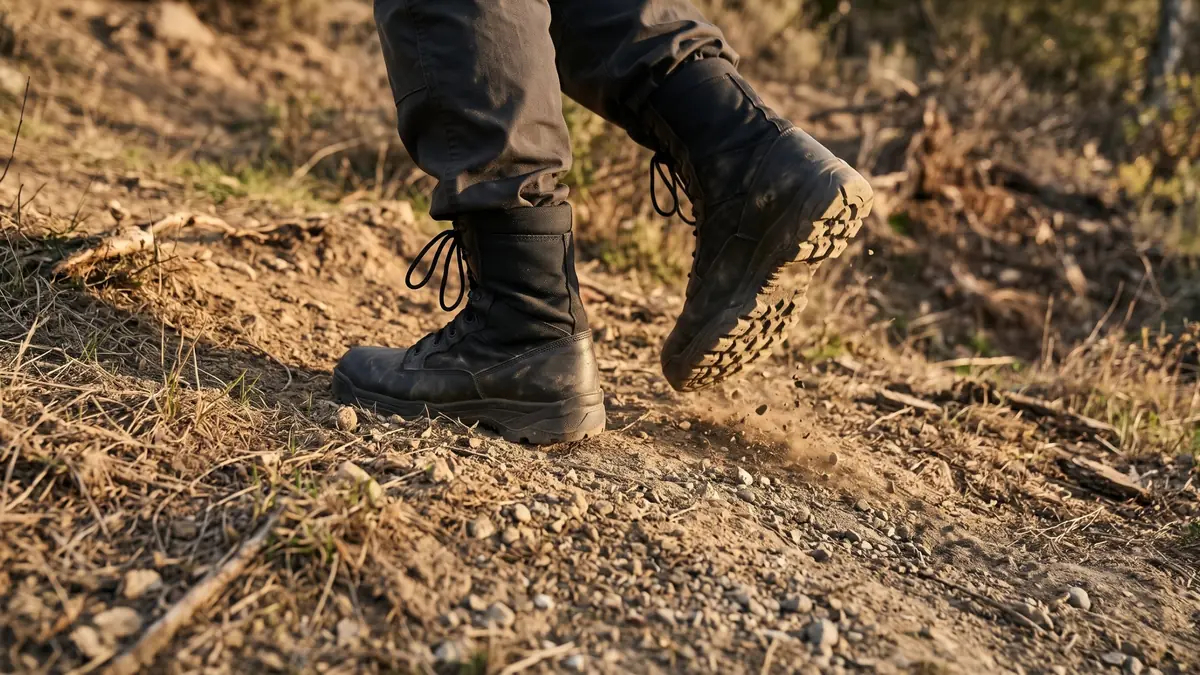
About the images: The images on this page are AI-generated illustrations of generic black tactical boots. They are not photos of Oakley products or of the pair I wore. To see the actual current Oakley boot, use the product link below.
Quick answer
- What I liked: Light, very comfortable from the first day, easy to break in, and sharp-looking in black.
- What let me down: My early pair was slippery on wet pavement and wet concrete, especially on a slope.
- Who I’d recommend them for: Black ones, for outdoor and field work: events, perimeter posts, and sand, dirt or uneven ground.
- Who should look elsewhere: Anyone whose post means a lot of wet, sloped or slick surfaces. Check the current model’s outsole first, or choose a boot sold on its wet-surface grip.
Watch: 5 checks before you buy duty boots
Prefer to watch? In this short video, Yair Arad covers what he learned wearing the first-generation Oakley Assault boot on guard and protection jobs, and the five checks he would run before buying any duty boot today: the long-shift test, the floor test, the uniform test, the return policy, and comparing the current listing to your actual job.
Video by Yair Arad · Watch on YouTube · Security Dogma channel
Boot images in the video are AI-generated illustrations of generic tactical boots, not photos of Oakley products. The field experience described is Yair Arad’s own.
Where I wore them
I wore my Oakleys on guard work and on executive protection details. On EP work, I wore them mostly at outdoor events. Shift lengths varied a lot, as they do in protection work, and I never had a complaint about comfort, even on the long days.
I wore the 8-inch black version. In my opinion the other colors don’t suit security work. Black fits a uniform, works with dark EP clothing at outdoor events, and doesn’t stand out. Nobody, client or venue, ever commented on them, and on an EP detail that’s what you want.
Comfort and break-in
This is where the Oakleys earned their place. I got them soon after they came out. They fit snugly at first, but they were comfortable from the beginning and took very little breaking in. I didn’t size up or swap the insoles. I just wore them.
That matches what Oakley was going for. Oakley says it developed the original Assault Boot with input from special operations users. The goal was a lightweight boot built around traction, support and comfort. In my experience, the “light” and “comfortable” parts were spot on.
I don’t remember my feet sweating in them, and I don’t remember the weather ever bothering me. I can’t tell you whether my pair was waterproof. I don’t remember, and I won’t guess. What I do know is that my feet didn’t get wet.

The weak spot: wet surfaces
The driveway fall wasn’t the first time I noticed the problem. Outside, on wet pavement and wet concrete, my early pair simply didn’t grip well. I already knew it, which is why I was talking about it when I fell. On flat ground I could manage. On a wet slope, it caught up with me.
Because of that, I switched to other boots at times. I don’t remember which brand.
To be fair to Oakley, the line has changed a lot since my first pair. Oakley says its newer Light Assault III was given a custom outsole designed to maximize traction. The current Field Assault Boot, which I link below, lists a Vibram rubber outsole. I haven’t worn either newer model, so I can’t tell you how they grip on wet ground. If your post involves rain, slopes or polished outdoor surfaces, read recent reviews about grip before you buy.
Dry ground, dirt and uneven terrain
On dry ground, the boots were excellent. Once I needed a better viewpoint during an assignment, so I climbed a small hill. The boots handled it well: steady footing, good ankle support, and nothing to worry about.
That’s why I still recommend them for field work. On sand, dirt, grass and broken ground, they felt light and sure-footed. The 8-inch height gave my ankles support without feeling like a heavy combat boot.
Durability and laces
My pair lasted a long time, though I can’t give you an exact number of months or years. I don’t remember a sole coming apart or a seam failing.
Mine laced up. I don’t believe they had a side zip. Today’s Field Assault Boot uses Oakley’s lace-lock system with braided nylon laces. Oakley doesn’t list a side zip for it.
Would I recommend Oakley Assault boots today?
Yes, with one condition. For outdoor and field security work, black Oakleys are light, comfortable and professional-looking, and they need very little break-in. That’s a rare mix. The one thing I’d check is grip on wet, sloped surfaces, because that’s where my pair let me down.
| My first-generation pair | Current Field Assault Boot (linked) | |
|---|---|---|
| Height | 8″ | 8″ (Oakley spec) |
| Color I’d choose | Black | Black is offered |
| Comfort | Excellent from day one | Not worn by me |
| Wet-surface grip | Poor, especially on slopes | Vibram outsole; not worn by me |
| Closure | Laces | Lace-lock system |
| Waterproof | Don’t remember; my feet stayed dry | Waterproofing not listed in Oakley’s specs |
Oakley Field Assault Boot (Black)
Oakley’s current 8-inch assault-style boot, with a Vibram rubber outsole
Check price →I earn a commission if you buy through this link, at no extra cost to you.
I haven’t worn this exact boot. I chose it because it’s Oakley’s current 8-inch assault-style boot and it comes in black, the closest match to what I wore. Check the listing’s size and color options, and its grip on wet surfaces, before you buy.
For other options, see Best Boots for Security Guards.
Frequently asked questions
Are Oakley Assault boots good for security guards?
For outdoor and field work, in my experience, yes. They’re light, comfortable from the first day and easy to break in. My early pair had poor grip on wet surfaces, so check the current model’s outsole if you work in the rain or on slopes.
Do Oakley Assault boots need breaking in?
Mine needed very little. They fit snugly at first but were comfortable from the beginning.
Are Oakley Assault boots slippery?
My first-generation pair was slippery on wet pavement and wet concrete. That’s how I ended up falling on a wet driveway. Oakley has since redesigned its outsoles, and I haven’t worn the newer models.
Which color should I get for security work?
Black. In my opinion it’s the only color that suits most security uniforms and EP clothing.
Did you test the current model?
No. I wore a first-generation pair years ago. The linked boot is the current model, and the card says so.
Reviewed November 6, 2026.
Sources
- Oakley Standard Issue: An Uneven Playing Field: Light Assault III (history of the original Assault Boot; Light Assault III outsole)
- Police1: Product Review: Oakley’s SI Assault Boot (first-generation boot released in 2002)
- Oakley: Field Assault Boot product page (8″ stack height, Vibram rubber outsole, lace-lock system)
Next steps
- → Field-Tested Security Gear: What I Actually Carried
- → Best Boots for Security Guards
- → Maglite vs Streamlight: my flashlight field review
- → Cold and Wet Weather Gear for Security Guards
- → How to Become a Bodyguard
How we choose and check gear: see our Editorial Policy.
Disclaimer: This page shares personal experience for general information only. Footwear fit and safety needs vary by person, post and employer requirements. Check your employer’s uniform and safety rules before you buy. Security Dogma is independent and is not affiliated with, sponsored by, or endorsed by Oakley or Luxottica. Oakley is a trademark of its owner, used here only to identify the product reviewed.