

Security Dogma is reader-supported. When you buy through links on this page, we may earn a commission at no extra cost to you. As an Amazon Associate I earn from qualifying purchases. Learn more
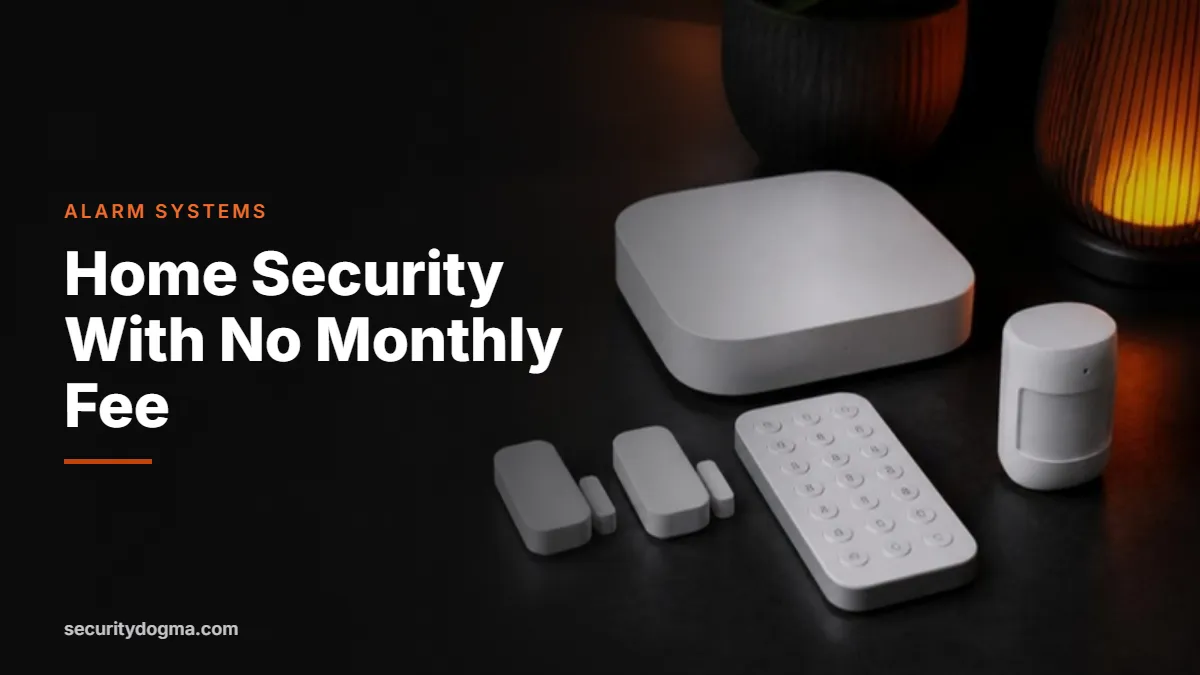
Traditional alarm companies made their money on long contracts and monthly monitoring fees. That model is fading. Today you can buy a wireless alarm kit, install it yourself in an hour and run it from your phone with no contract and, if you choose, no monthly fee at all.
The catch is that “no monthly fee” means you are the monitoring centre. This guide explains what you give up, who self-monitoring suits, and which best-selling systems on Amazon are worth buying. Features and plans change often, so check the current details on each product page before you buy.
Quick answer
- Self-monitoring means alerts go to your phone and you decide whether to call the police.
- Professional monitoring adds people who call you and dispatch help, for a monthly fee. Many DIY systems let you add it only when you need it.
- Best for most people: a DIY kit you can run free and upgrade later.
- Alarms work: about 60% of burglars in a major survey said an alarm would make them pick another target.
Our picks at a glance
SimpliSafe 8-piece kit
Wireless · loud siren · optional monitoring
One of the best-selling alarm systems on Amazon. Quick to install, easy to expand, and you can add or drop professional monitoring as your needs change.
Watch out for: App features without a plan are limited; check what the free tier includes before you buy.
See current price →Ring Alarm kit
Base station · contact and motion sensors · keypad
Works with Ring doorbells and cameras and with Alexa. Ring has long offered free self-monitoring with app alerts, with paid plans adding professional monitoring.
Watch out for: Check current plan details; Ring changes plans and pricing from time to time.
See current price →eufy Security alarm kit
HomeBase local storage · cameras and sensors
eufy is built around local storage on its HomeBase, so camera recordings do not depend on a cloud subscription.
Watch out for: Smaller selection of sensors than SimpliSafe or Ring.
See current price →TP-Link Tapo C120
2K · local microSD storage · indoor/outdoor
A top-selling camera that records to a memory card with no subscription for basic use. Add one to watch the main door.
Watch out for: Advanced detection features may need a plan.
See current price →Self-monitoring vs professional monitoring
| Self-monitoring | Professional monitoring | |
|---|---|---|
| Who responds | You | A monitoring centre, which contacts you and can dispatch police, fire or medical help |
| Monthly cost | None or very low | A monthly fee |
| When you are asleep, in a meeting or on a plane | Alerts may be missed | Someone is always watching |
| Insurance discount | Rarely | Often available; ask your insurer |
| Contract | None | Usually month-to-month with DIY brands |
The honest trade-off: self-monitoring is only as good as your response time. If you can check your phone quickly and you have a neighbour who can look in, it works well. If you travel a lot, work where you cannot answer your phone, or live alone, professional monitoring is worth considering at least for those periods.
Do alarms actually deter burglars?
The best evidence comes from a University of North Carolina at Charlotte study that surveyed 422 incarcerated burglars in North Carolina, Kentucky and Ohio. About 83% said they would try to find out whether a home had an alarm before breaking in, and about 60% said an alarm would make them look for another target. When an alarm went off during a burglary, half said they would leave immediately and another 31% said they would sometimes leave.
That is the strongest case for any alarm, monitored or not: the siren and the visible signs of a system do most of the work. Place the yard sign and window stickers where they can be seen, and put the siren or base station where it is loud enough to be heard outside.
What to look for in a no-fee system
- Free app alerts. The point of self-monitoring is getting notified. Confirm the free tier sends push notifications, not just a local siren.
- A loud siren. The siren is your main deterrent without monitoring.
- Backup power and connectivity. A battery in the base station keeps it running in a power cut; cellular backup usually needs a plan.
- Local video storage. If you add cameras, local storage on a microSD card or hub avoids a cloud fee.
- Easy expansion. Start with doors and a motion sensor, then add sensors for windows, glass break, water leaks and smoke.
- Optional monitoring. The ability to turn on professional monitoring for a holiday is worth having even if you rarely use it.
How to set up a DIY alarm properly
1. Cover every entry door
Put a contact sensor on the front door, back door, patio door and the door from the garage. These are where most entries happen.
2. Add a motion sensor in the main hallway
Place it where anyone moving between rooms has to pass, usually a hallway or the stairs. Most kits include one; pet-friendly sensors ignore smaller animals.
3. Cover ground-floor windows
Add contact sensors to ground-floor and basement windows, starting with those hidden from the street. For sliding doors, add a bar in the track as well; see our sliding glass door guide.
4. Put the keypad inside, away from windows
Burglars should not be able to see whether the system is armed from outside.
5. Turn on two-factor authentication
Your alarm app account controls your home. Use a strong, unique password and two-factor authentication, and share access with family through the app rather than by sharing a password.
6. Test it monthly
Arm the system and open a door to check the siren and the phone alert. Replace batteries when the app warns you.
What a starter kit should include
Most DIY kits come in several sizes. Here is how we would size one for common homes, so you do not overbuy or leave a gap:
| Home | Sensors to start with |
|---|---|
| Studio or one-bedroom apartment | Base station, keypad, 1 entry sensor on the front door, 1 motion sensor, 1 to 2 window sensors |
| Two- or three-bedroom home | Base station, keypad, 3 to 4 entry sensors (all exterior doors), 1 to 2 motion sensors, ground-floor window sensors |
| Larger home or two floors | As above plus a motion sensor on each floor, glass-break sensors near large windows, and a second keypad by the garage or back door |
Add environmental sensors after the basics. Water leak sensors under the sink, near the washing machine and by the water heater can save thousands in damage, and many alarm systems can add smoke and carbon monoxide monitoring. These are the sensors people most often wish they had bought first, because a leak or fire is more likely than a burglary in most homes.
Finally, think about where the base station goes. Put it somewhere central and out of sight from windows, plugged into an outlet that is not switched off by a wall switch. If the system relies on Wi-Fi, keep the router somewhere a burglar is unlikely to reach first; a router by the front door is easy to unplug.
Adding cameras without a subscription
Most camera brands put advanced features such as long cloud history and smart detection behind a subscription, but many also record locally for free. Wyze and Tapo cameras are among the best-selling on Amazon and record to a microSD card. eufy builds its system around local storage. If you already use Ring or Blink cameras, check which features you lose without a plan. Our home security camera guide covers the options.
Who should pay for monitoring
- People who travel often or for long periods.
- People who live alone or have elderly family members at home who may need medical help.
- Homes in areas with slow police response, where a verified alarm call gets priority.
- Anyone whose insurer offers a meaningful discount for monitored alarms.
- Owners of second homes that sit empty.
For everyone else, a self-monitored DIY system with a loud siren, visible signs and app alerts is a very good, very affordable option, and it can be upgraded at any time.
Frequently asked questions
Can I have a home security system without a monthly fee?
Yes. Many DIY systems can be self-monitored for free, sending alerts to your phone. Professional monitoring is optional and costs extra.
Is self-monitoring worth it?
For many people, yes. Most of the deterrent value of an alarm comes from the siren and visible signs, which work with or without monitoring. The weakness is missed alerts.
Does SimpliSafe work without a subscription?
The system and siren work without a plan, but app features are limited. Check SimpliSafe’s current plan details before buying if you want free phone alerts.
What is the best no-contract home security system?
SimpliSafe and Ring Alarm are the best-selling DIY systems on Amazon and both work without a long-term contract. eufy is a good choice if you want local video storage.
Do burglars avoid houses with alarms?
In the UNC Charlotte survey of 422 burglars, about 60% said an alarm would make them seek another target.
Keep reading
- How to secure your home: the complete guide
- Apartment security for renters
- Home security while on vacation
- Best home security cameras
Sources
- UNC Charlotte — Through the eyes of a burglar (study of 422 incarcerated burglars)
- Blevins, Kuhns & Lee — Understanding Decisions to Burglarize from the Offender’s Perspective (UNC Charlotte, 2012)
Statistics verified October 2026. Product plans change often; check current details on each product page. Amazon sales signals checked October 2026.
How we choose and check gear: see our Editorial Policy.